
MindVibe Health Resources
Alcohol and Anxiety: Why a Drink Makes It Worse Later
A drink calms anxiety fast — and then your brain overcorrects. Here's how rebound anxiety and broken sleep turn tonight's relief into tomorrow's dread, and what actually helps.
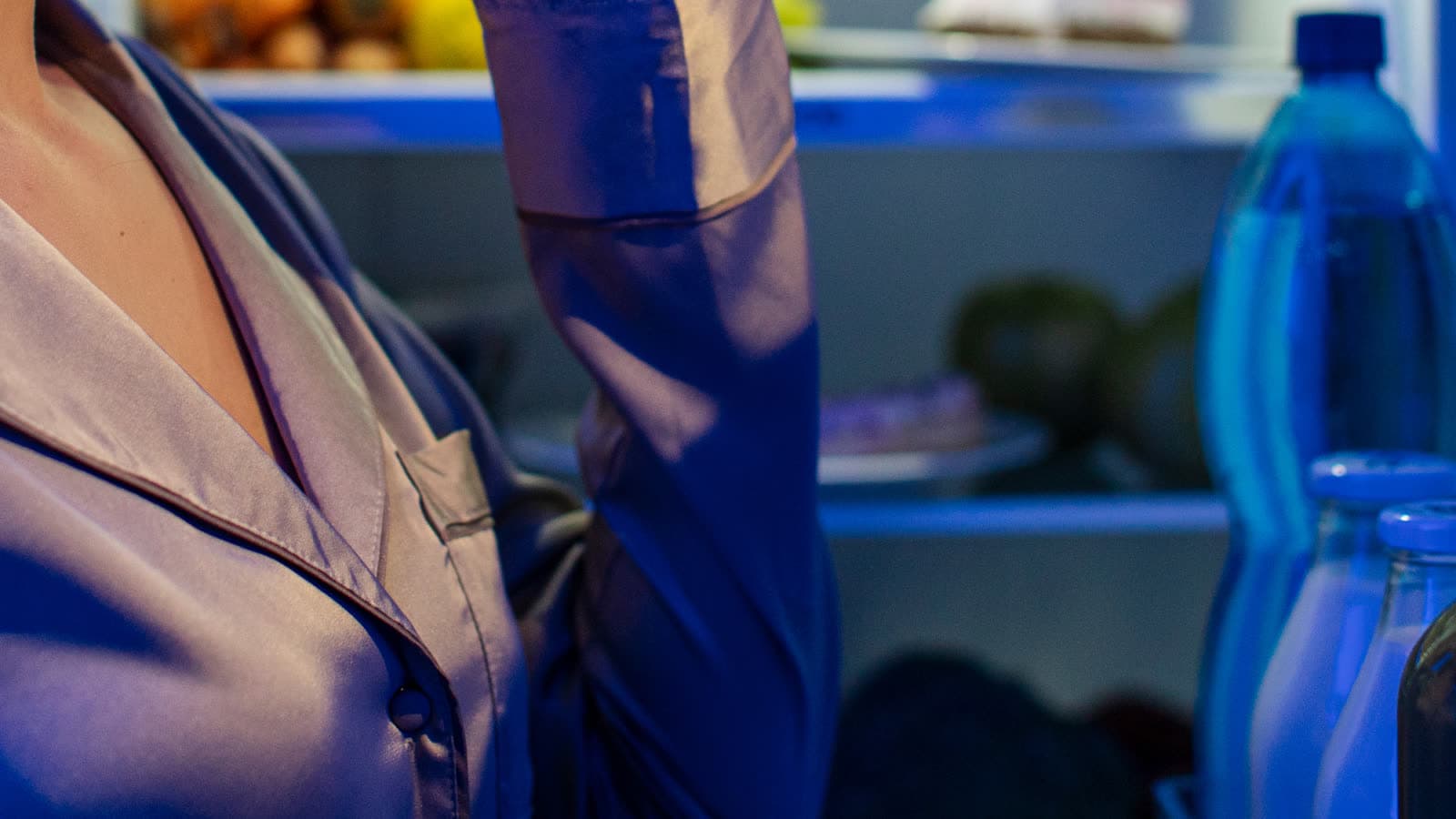
A drink calms anxiety because alcohol slows down the same brain systems that produce fear and worry. But your brain pushes back against that slowdown, and when the alcohol wears off, the pushback is still running — leaving you more anxious than you were before you poured the glass. Run that loop enough times and two things happen: the drink quits working, and the rebound keeps getting worse.
This article is written for someone who wouldn't say they have a drinking problem: a glass or two most evenings "to take the edge off," and no idea why the edge keeps getting sharper.
Why does a drink take the edge off so quickly?
Alcohol works on the brain's braking and accelerating systems at the same time. It boosts the effect of GABA, the main calming chemical messenger, and it dampens glutamate, the main excitatory one. The result arrives within minutes: muscles loosen, worried thoughts get quieter, the knot in your chest eases.
That speed is exactly what makes alcohol so convincing. Therapy takes weeks. Medication for anxiety often takes weeks. A drink takes fifteen minutes. Your brain files that away as evidence that alcohol works — and the next time anxiety spikes, reaching for a drink feels less like a choice and more like the obvious solution.
The problem is what happens after the fifteen minutes.
Then why do I wake up at 3 a.m. with my heart pounding?
Your brain won't just sit there and let itself be slowed down. As long as alcohol is in your system, it pushes back: it dials down its sensitivity to the calming signals and dials up the excitatory ones, all to keep itself running at something close to normal speed.
Alcohol leaves your body within hours. The compensation doesn't. Once the alcohol is metabolized, you're left with a brain that has adjusted itself to be more excitable, with nothing suppressing it anymore. The result is a state that is, in a very real sense, a small withdrawal: racing heart, sweating, restlessness, a vague sense of dread, sometimes a jolt awake in the early hours of the morning.
People have started calling this "hangxiety," and the nickname is apt. It isn't your imagination, it isn't guilt about the drinking (though guilt can pile on top), and it isn't a sign that something new is wrong with you. It's the pendulum swinging back past where it started.
What does alcohol do to my sleep?
This is the part of the cycle most people miss, because on the surface alcohol seems to help sleep — you fall asleep faster, and often more heavily, in the first part of the night.
Then the second half of the night falls apart. As your body clears the alcohol, sleep becomes lighter and more fragmented. Alcohol also suppresses REM sleep, the stage most involved in processing emotion, and REM tends to rebound later in the night in a way that can make sleep feel restless and dream-heavy. Plenty of people find themselves awake at 3 or 4 a.m., usually just as the rebound anxiety hits, and can't sink back into deep sleep.
Why does this matter so much for anxiety? Because poor sleep is one of the most reliable ways to make the next day's anxiety worse — sleeplessness and anxiety feed each other in both directions. You wake up already depleted, your tolerance for stress is lower, worried thoughts are harder to talk yourself out of — and by evening, a drink to unwind sounds better than ever.
Is this the self-medication loop people talk about?
Yes, and it's worth seeing the whole shape of it:
- Anxiety rises during the day.
- A drink brings relief — fast, reliable, well-earned, it feels like.
- Rebound arrives as the alcohol clears: overnight or the next morning, your baseline anxiety is a notch higher than it was.
- Sleep is worse, which raises anxiety further.
- The next drink comes a little easier — sometimes a little earlier, sometimes a little larger, because tolerance builds and the old amount doesn't land the same way.
Nothing in that loop requires you to be drinking heavily, drinking in the morning, or hiding bottles. You can be well inside this cycle on two glasses of wine a night. The loop isn't defined by how much you drink — it's defined by why you drink and what happens after.
Only a clinician who has actually talked with you can tell you where you sit on that spectrum, and this article can't and won't try. But if you've read this far and recognized yourself, that recognition is worth taking seriously.
If I stop drinking, will my anxiety go away?
Sometimes a meaningful part of it does. When anxiety is largely being generated by the drink–rebound–bad-sleep cycle, people often notice a real difference after a few weeks without alcohol — steadier mornings, deeper sleep, a lower baseline.
But two honest caveats matter here.
First: cutting back is not, by itself, treatment for an anxiety disorder. If your anxiety was there before the drinking started, or if it's still loud after a genuine alcohol-free stretch, it needs its own care. That's exactly what treatment for anxiety — therapy, medication, or both — is for, and "I removed the thing that was making it worse" and "I treated it" are different accomplishments.
Second, and this is a safety issue: if you have been drinking heavily every day for a long time, do not stop abruptly on your own. Alcohol withdrawal can be medically dangerous, and in some cases requires supervised care. Talk to a doctor first about how to come down safely. This is not a scare tactic; it's basic medicine.
What if I'm really drinking to quiet something else?
For a lot of people, the anxiety alcohol soothes isn't free-floating — it has a source, and naming the source changes what help looks like.
- If drinking helps you not think about something that happened to you, if it dulls flashbacks, nightmares, or a body that never feels safe, care for trauma addresses the engine rather than the exhaust.
- If the "anxiety" is tangled up with a flat, heavy mood that alcohol briefly lifts, it's worth knowing that alcohol is a depressant and reliably deepens low mood over time — and that help for depression exists that doesn't cost you the next morning.
- If drinking quiets intrusive, repetitive thoughts you can't shut off, that pattern deserves an evaluation for obsessive-compulsive disorder rather than a nightly workaround.
- If your moods swing well beyond anxious-versus-calm — stretches of not needing sleep, racing plans, then crashes — alcohol is especially destabilizing, and it's worth reading about bipolar disorder and raising it with a clinician.
- And if the drink is really about slowing down a mind that never stops — restlessness, scattered focus, an engine that won't idle — an evaluation for adult ADHD may explain more than the anxiety label does.
None of these are things to diagnose in yourself from a blog post. They're reasons the first appointment usually starts with a broad conversation rather than a prescription pad.
What actually helps break the cycle?
Get honest data. For two weeks, jot down what you drank each evening and rate your anxiety the next morning from 0 to 10. You may be surprised by how clear the pattern looks on paper. That record is also enormously useful to bring to an appointment.
Try a real alcohol-free stretch. A few weeks, not a few days, because the first several nights of sleep without alcohol are often worse before they get better — that's the adaptation unwinding, and it's the point where many people conclude "I sleep worse without wine" and go back. Knowing the dip is coming makes it survivable.
Treat the anxiety directly. Cognitive behavioral therapy and, when appropriate, medication are the tools with real evidence behind them for anxiety itself. If low mood is the bigger piece and standard treatments haven't worked, there are further options — including esketamine (Spravato) for treatment-resistant depression — that a psychiatrist can walk you through.
Be honest with your prescriber about alcohol. This matters for your safety, not for judgment. Some anxiety medications — benzodiazepines in particular — are dangerous combined with alcohol, and your clinician can only steer around that if they know the real picture. The same honesty applies to anything else you take or use.
Don't wait until you've "fixed" the drinking to ask for help. You do not need to arrive sober, sorted, or certain of your diagnosis. The whole point of an evaluation is to untangle what's rebound, what's underlying, and what to do first. You can see who you'd be meeting with, book a first appointment online, and check whether your insurance covers visits before you commit to anything.
If you're in crisis, don't wait for an appointment at all. If you're having thoughts of harming yourself, or drinking to blunt thoughts like that, call or text 988 — the Suicide & Crisis Lifeline — any time, day or night. It's free and confidential.
Frequently asked questions
Why is my anxiety worst the morning after drinking?
Because that's when your blood alcohol has hit zero but your brain's compensation — turned-down calming signals, turned-up excitatory ones — is still active. You're experiencing a small withdrawal, layered on top of fragmented sleep. It usually eases over the day as your brain rebalances.
How long does rebound anxiety last?
For an occasional night of drinking, the rebound tends to ease as your body clears the alcohol and your brain rebalances. If you've been drinking regularly for a long time, your baseline has shifted, and it can take weeks of not drinking for anxiety and sleep to settle into their true level. That's why a few dry days rarely tells you much.
Is a glass of wine every night actually a problem?
The amount matters less than the pattern. Questions worth asking yourself: Do I drink because I'm anxious? Does skipping a night feel hard? Is my morning anxiety worse than it was a year ago? Yes answers don't diagnose anything — but they're worth bringing to a clinician rather than sitting on.
Can I take anxiety medication if I still drink?
Some medications are reasonably compatible with light drinking; others — especially benzodiazepines — are genuinely dangerous with alcohol. Have that conversation with your prescriber — openly, and with the actual numbers on how much you drink. Almost nothing you could tell a psychiatrist about alcohol will be new to them — they've heard it before.
Do I have to quit drinking before getting help for anxiety?
No — come exactly as you are. Understanding the role alcohol is playing is part of the evaluation, not a prerequisite for it — and treating the anxiety directly addresses the reason the drink felt necessary in the first place.
Is it dangerous to just stop drinking cold turkey?
It can be, if you've been drinking heavily and daily for an extended period. Alcohol withdrawal in that situation can cause serious medical complications and should be managed with a doctor's guidance. Lighter, less frequent drinkers generally don't face this risk, but if you're unsure which group you're in, ask before you stop abruptly.
Can alcohol cause panic attacks?
The rebound state — racing heart, sweating, a surge of dread as alcohol leaves your system — can feel like a panic attack and, in people prone to panic, can help trigger one. Panic attacks — whether alcohol is involved or not — are worth an evaluation in their own right, and if you're unsure whether what you felt was a panic attack or an anxiety attack, the difference is worth understanding.
Does the anxiety come back if I start drinking again?
The rebound mechanism doesn't go away; it's how everyone's brain responds to a depressant. If you return to the same pattern of drinking, the same cycle tends to reassemble itself. What changes with treatment is that you have other tools for the anxiety, so the drink is no longer carrying the whole load.
---
This article is for educational purposes only and is not medical advice, a diagnosis, or a substitute for care from a licensed clinician. If you are in crisis or having thoughts of self-harm, call or text 988 to reach the Suicide & Crisis Lifeline, available 24/7.
Ready for anxiety psychiatry support?
MindVibe offers psychiatric evaluation and medication management for anxiety online and in person in Texas and California.
Not sure where to start? Take a free online anxiety screening
A private screening for depression, anxiety, focus, sleep, substance use or trauma. It is not a diagnosis, and it takes a few minutes. You will see your results after a short contact step. Only your name and email are required; a phone number is optional.
Start the free screening